Almost every studio in New York quotes you an hourly rate, and almost nobody tells you how many hours it takes. That gap is where podcast budgets go to die.
An hour of studio time is not the product. A published episode is the product. Between the two there is recording, editing, mixing, color, cover art, clips and uploading, and someone has to do all of it. If that someone is you, the studio’s rate was never the real price.
So here is the whole number, three different ways, with the parts that usually stay hidden.
First, the unit that matters
Stop pricing rooms. Price finished episodes.
A show that publishes weekly needs about 50 episodes a year. A show that publishes twice a month needs 24. Whatever you are quoted, divide it until you get to one episode, delivered and live. That is the only number you can compare across studios, and it is the only one that tells you whether the show survives past month three.
Way one: you do it yourself
The cheapest option on paper, and the most expensive in hours.
Equipment. A usable audio-only setup starts around $150 to $400: one decent dynamic USB microphone per person, a pair of headphones, and something to keep the mic off the table. If you want two or three people recorded properly at once, you are into an interface or a dedicated recorder, and the realistic range becomes $600 to $1,200. Add cameras and lights and you are past $3,000 before anyone has said a word.
Software. Somewhere between free and about $250 a year, depending on how much you want the editing to help you.
Time. This is the line that decides everything. A one-hour conversation takes roughly four to six hours to edit into a publishable episode, and that is if you already know the software. Add cover art, show notes, chapter markers, clips for social and uploading, and a weekly show is most of a working day, every week, forever.
Do the arithmetic on your own hourly rate before you call this option cheap. For a lot of business owners, six hours of their own time costs more than hiring the work out, and the show still ends up sounding like a spare bedroom.
When it is the right call: you are testing whether you enjoy making a podcast at all. Six episodes on a $200 microphone will tell you more than any studio pitch.
Way two: you rent a room
You book a space with gear in it. You bring the operator or you operate it yourself. You leave with raw files.
In Manhattan, room rentals run roughly $150 to $200 an hour, with the average landing near $165. Marketplaces list rooms starting around $19 an hour, and those are what they cost: a corner of somebody’s office with two microphones on it.
The math for a monthly show, recording two episodes in one three-hour block:
- Studio: about $500 for the session
- Editing, if you hire a freelancer: $150 to $400 per episode
- Cover art and clips: $50 to $200 per episode
That is roughly $900 to $1,500 a month for two episodes, assembled from three different vendors who do not talk to each other. It works. It is also four separate invoices and a project-management job that lands on you.
When it is the right call: you already have a producer or an editor on your team. Paying a production company to redo work you can already do is waste.
Way three: you buy finished episodes
A production company takes the session and hands the episode back done. Cameras are operated during the recording. Audio is mixed. The episode is cut, colored, and delivered ready to publish, usually with vertical clips.
In New York, monthly programs at the lean end of the market run roughly $1,500 to $4,000 a month, depending on how many sessions you get and how much post-production is included. Above that range you are into agencies that also do strategy, booking and distribution.
If a monthly quote lands well under $1,500, ask what is missing. It is almost always the editing.
What actually moves the price
Five things, in the order they matter:
- Video or audio only. Multi-camera video roughly doubles both the shoot and the post. It is the single biggest line item, and it is the one most worth paying for if clips are your distribution plan.
- Number of people. Every extra person is another microphone, another channel, another camera angle and more editing decisions. Four people is a meaningfully harder session than two.
- How many clips you want. Cutting ten vertical clips from an episode is its own job, often as long as the main edit.
- Turnaround. Forty-eight hours costs more than two weeks, because someone has to clear their schedule for you.
- Whether anyone is on camera direction. A live camera director costs money during the session and saves more in post than they cost.
The costs nobody puts in the quote
Your own hours. Even in a full-production setup, expect to spend time on guest booking, topics and approvals. It is much less than doing the edit, but it is not zero.
The catalog problem. If the studio keeps your raw files, changing studios later means starting from nothing. Ask who owns the originals before you sign anything, not eighteen months in.
The quiet stop. The most expensive podcast is the one that publishes four episodes and stops, because you paid for all of it and got none of the compounding. Whatever you choose, choose the version you can still be doing in month seven.
A worked example
A weekly video show, four episodes a month, two hosts, one guest.
| Do it yourself | Rent a room | Buy episodes | |
|---|---|---|---|
| Cash per month | $0 to $100 | $1,200 to $2,000 | $1,500 to $4,000 |
| Your hours per month | 20 to 30 | 8 to 12 | 3 to 5 |
| Vendors to manage | 0 | 3 | 1 |
| Looks like video? | Rarely | Sometimes | Yes |
There is no correct column. There is only the column that matches what your time is worth and whether video is the point of the show.
What we charge
We run a podcast studio in the Bronx, so read this as what it is.
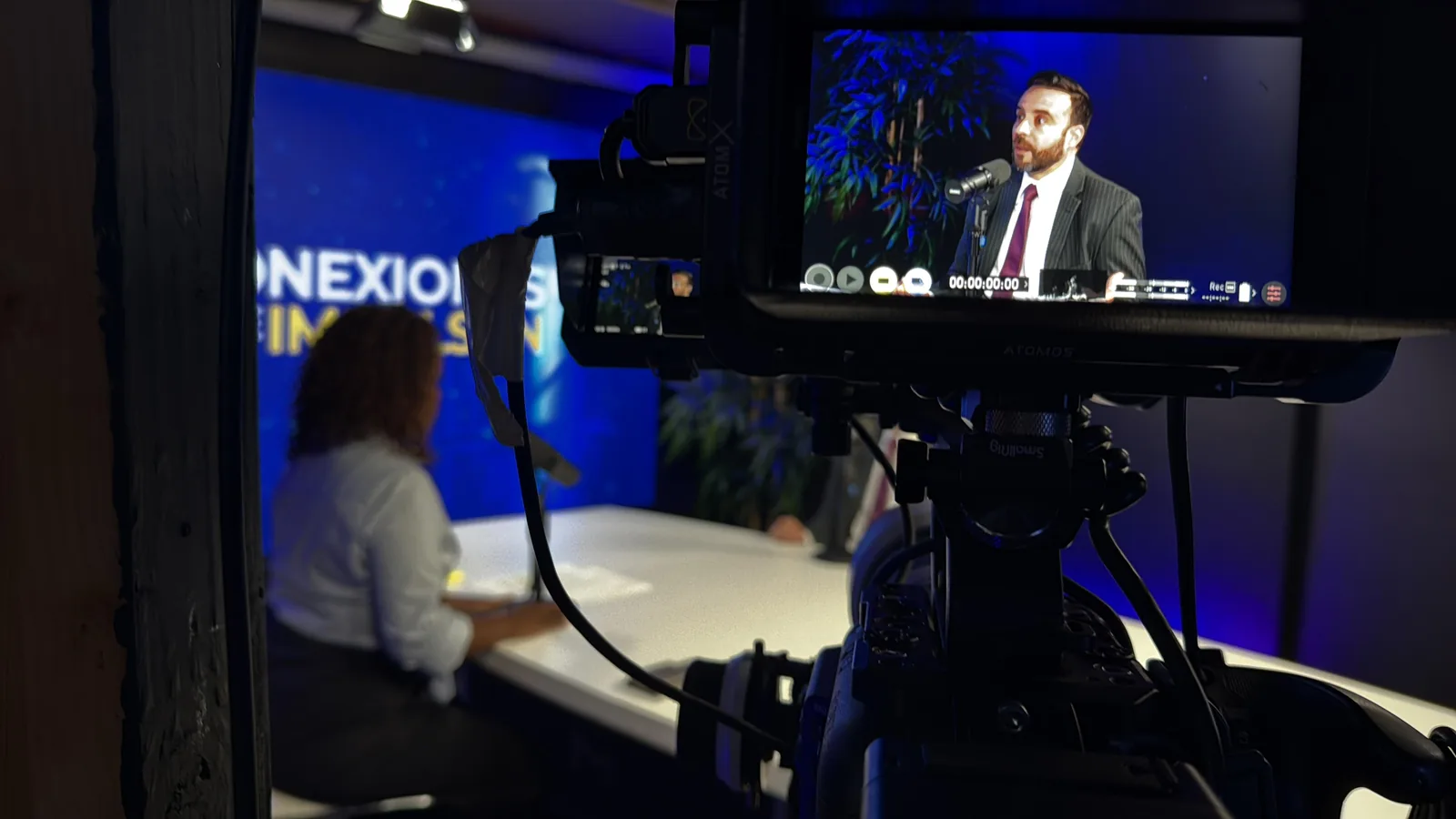
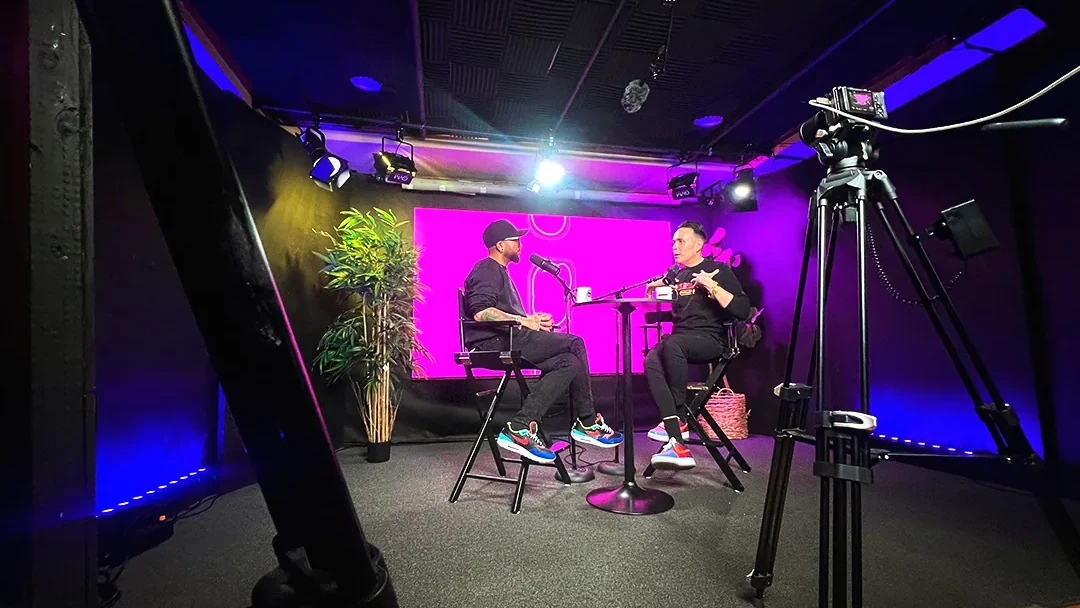
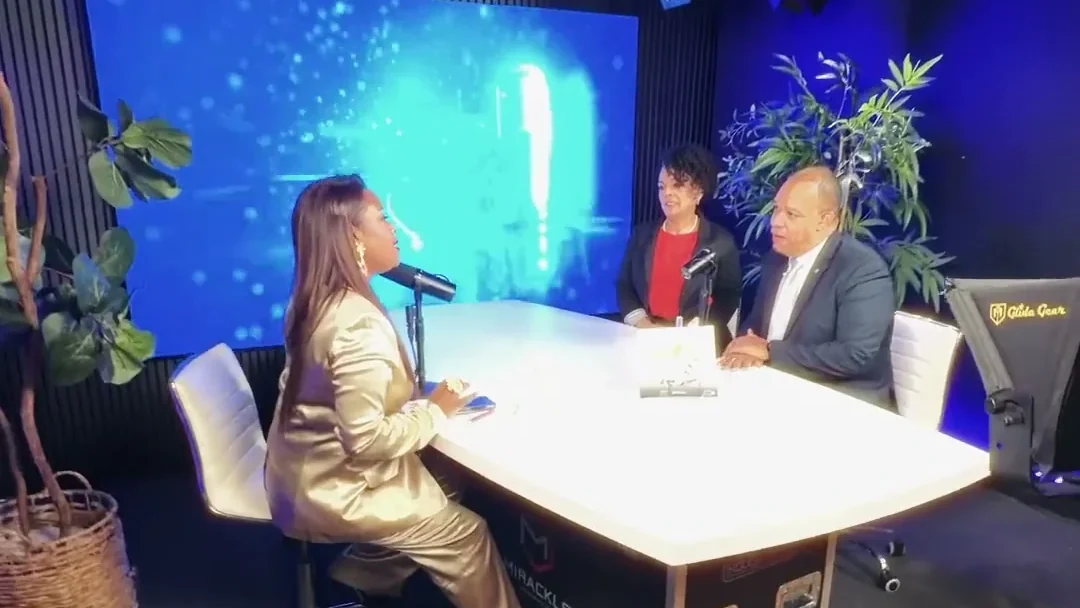
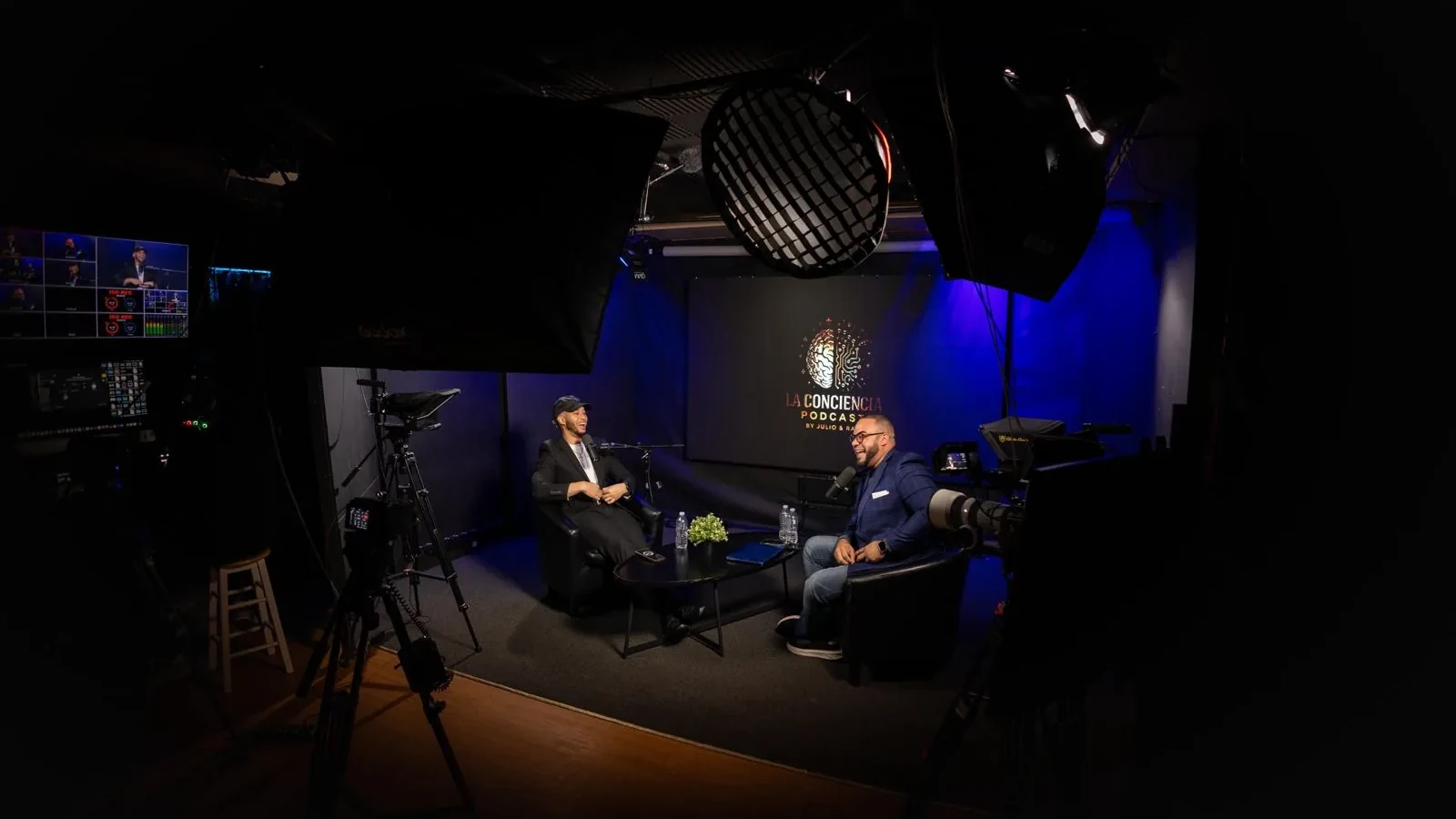
Our monthly program is $1,600 a month. That covers recording sessions in the studio with a camera director working up to eight Sony 4K cameras, a Shure microphone on its own channel for every person, recorded in 32-bit float so a sudden laugh cannot ruin the take, and the episode back in about 48 hours edited, colored and mixed, with vertical clips cut for social, with one round of changes.
What you get back is the finished episode. The raw camera files stay with us unless you book the recording without editing, which is a different arrangement. Ask before you sign, the same way this article tells you to ask everyone else.
There is also a single-session option if you want to record once before committing to a program. Ask us for that number and we will give it to you plainly.
Parking is private and on site, and the studio is open until 10 PM, which matters more than it sounds like it does when your guest is coming straight from work.
The honest summary
If you are testing the idea, do not hire anybody. Buy a $200 microphone and publish six episodes.
If you have an editor already, rent a room and keep your money.
If video is the point, and you want a show that is still publishing next year, price it per finished episode and compare like with like. That comparison is the whole game, and most studios would rather you did not make it.
Want to see what a session actually involves? Book a studio tour. Thirty minutes, free, in person or over video. Or read the seven questions worth asking any studio before you spend anything.
You can also see what we do and what it includes, with the specs written out.