Every week somebody asks us whether they should book a studio or just buy a good microphone and record at home. Almost everyone asking expects us to say studio. Often the honest answer is the microphone.
Here is what actually separates the two, in the order it matters, so you can decide without a sales pitch.
What better gear genuinely fixes
Buying your way up from a laptop microphone to a proper one is the single biggest jump in quality you will ever make, and it is cheap.
A dynamic microphone close to your mouth rejects most of the room. That one change removes the hollow, far-away sound that makes amateur podcasts hard to listen to. You can get there for around $100 to $250 per person, and you will hear the difference immediately.
Headphones fix the second most common problem, which is echo bleeding from your speakers back into the microphone. Another $50.
So for a two-person audio show, roughly $300 to $500 of equipment gets you to genuinely listenable. Anyone telling you that you need a studio to sound acceptable is selling something.
What gear cannot fix
Here is where it stops.
The room. A microphone captures your voice and the room it is in. Hard walls, bare floors and a high ceiling put a slight metallic ring on everything, and no plugin removes it cleanly. This is why closets and rooms with a rug, a sofa and curtains sound better than a nice empty office. If your recording sounds “boxy” and you cannot work out why, it is the room, not the microphone.
Two people talking at once. With one microphone in the middle of a table, overlapping voices are permanently merged into one track. Nobody can separate them afterward. The fix is one microphone and one channel per person, which means an interface or a recorder, which is where home setups start getting complicated and expensive.
A sudden loud moment. Someone laughs directly into the microphone and the recording clips. Once it clips, that audio is gone. Studios that record in 32-bit float are immune to this, which sounds like a technicality until it happens on the one episode where your guest said the thing you wanted.
Guests. This is the underrated one. Recording at your kitchen table is fine when it is you. It changes when you are asking a client, an executive or a public figure to come to your house.
Video is where the gap gets wide
If your show is audio only and staying audio only, most of the argument for a studio disappears. Buy good audio and stop reading.
Video is different, and the difference is not subtle.
A phone or webcam gives you one flat angle with whatever light is in the room. A multi-camera setup gives you a wide shot, a close-up on each person, and cuts between them. That cutting is what makes a fifty-minute conversation watchable instead of a static shot people abandon at minute three.
Lighting is the other half, and it is the part people underestimate. Overhead room light comes from directly above, which puts shadows in your eye sockets and under your nose. Proper lighting costs more than most people expect and takes longer to set up than most people want to spend, every single time they record.
The realistic home video setup that actually looks good, once you have added two cameras, lights, stands and a way to record them in sync, runs $3,000 to $8,000 and a couple of hours of setup per session. At that point, renting a room where it is already built and already aimed is usually cheaper per episode.
The test that actually decides it
Forget the gear comparison. Answer these four:
- Is video the point? If clips are your distribution plan and the show is going on YouTube, the gap is real. If not, it mostly is not.
- How many people, and are they in the same room? One or two is manageable at home. Three or four in one room is a genuinely hard audio problem.
- Are you inviting guests you want to impress? A guest who walks into a set treats the conversation differently than a guest sitting on your sofa. That shows up in the recording.
- How many hours a week can you give this? Home recording is not just recording. It is setup, teardown, and the edit. If the honest answer is under five hours, a home workflow will quietly kill the show around episode six.
If you answered no, two, no, and plenty, record at home. You will save a lot of money and lose very little.
What a studio is actually buying you
Not sound quality, mostly. You can get close at home.
What you are buying is time and consistency. The lights are already aimed. The cameras are already framed and someone is switching between them while you talk. The microphones are already set. Nobody spends forty minutes before the conversation and ninety minutes after it.
And you are buying a room that does not need apologising for when someone important walks in.
The middle option nobody mentions
You do not have to choose once and forever.
A pattern that works well: record at home for the regular episodes, and book a studio for the ones that matter. The interview with the guest you spent three months getting. The season opener. The four episodes you want to cut fifty clips from.
Buying a studio session per quarter instead of per week is a real budget, and it puts the production value exactly where it earns its money.
How we handle this
We run a podcast studio in the Bronx, so weigh this accordingly.
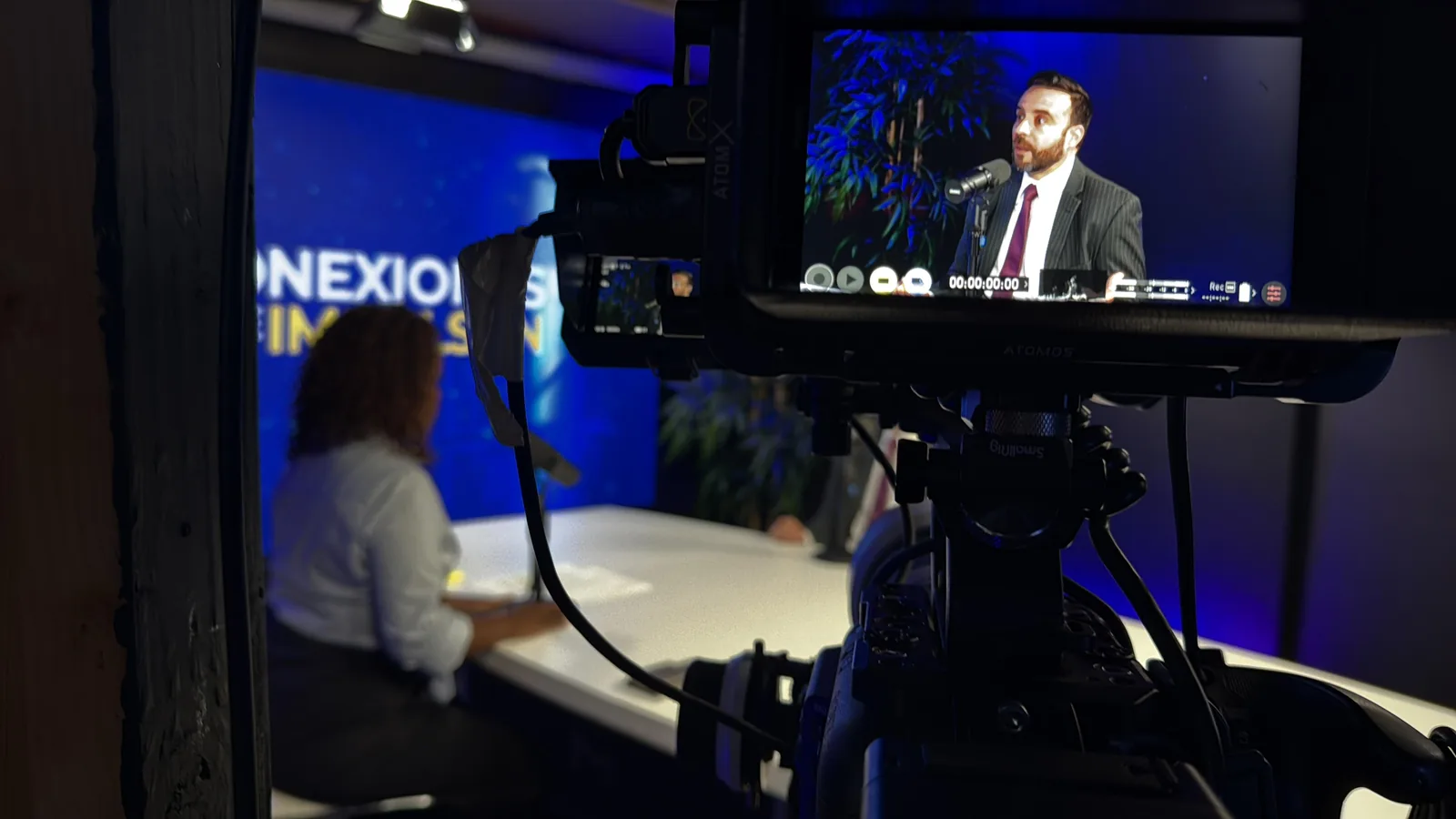
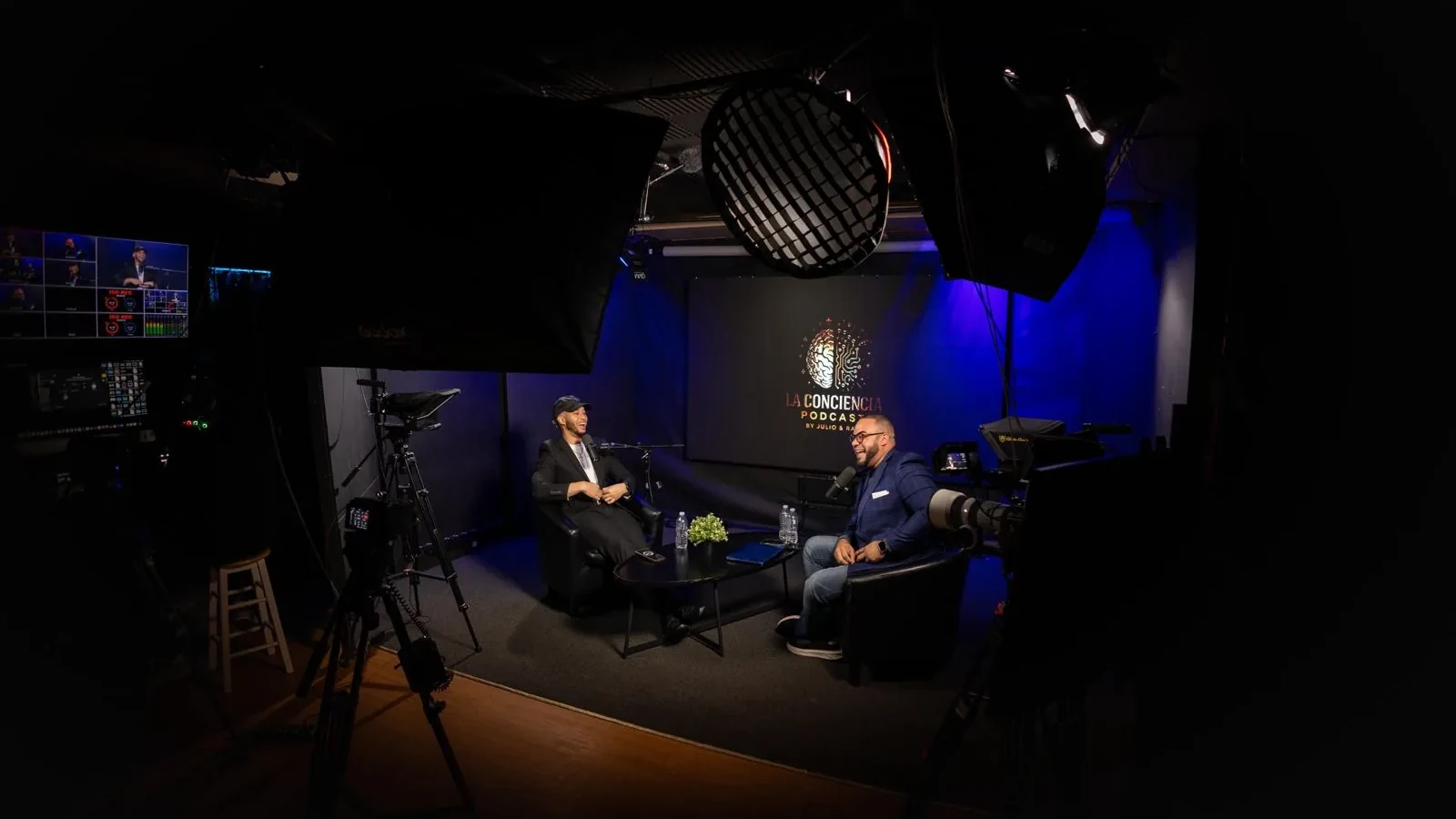
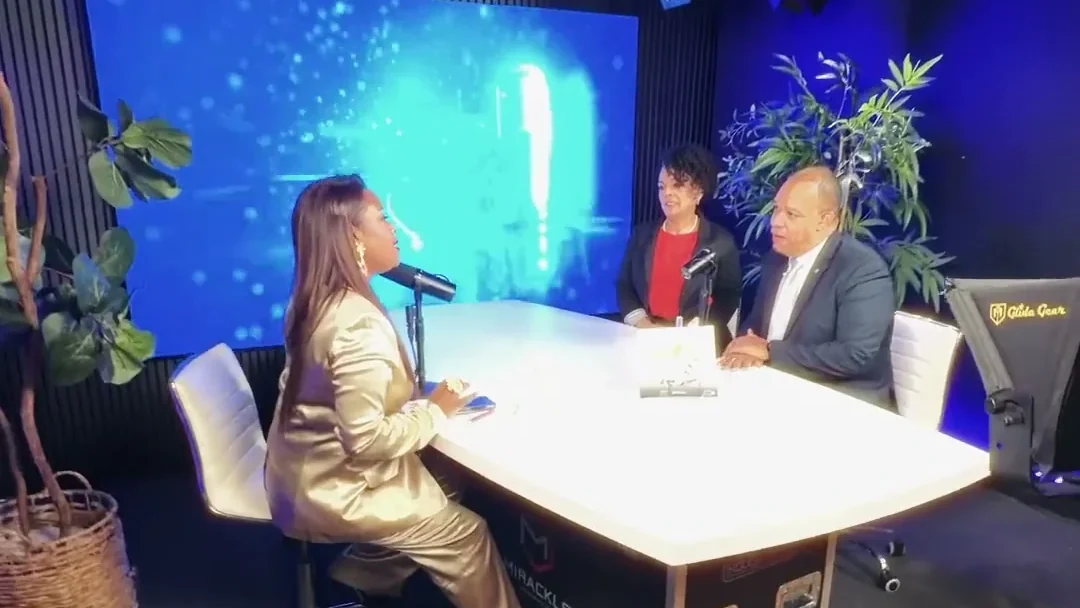
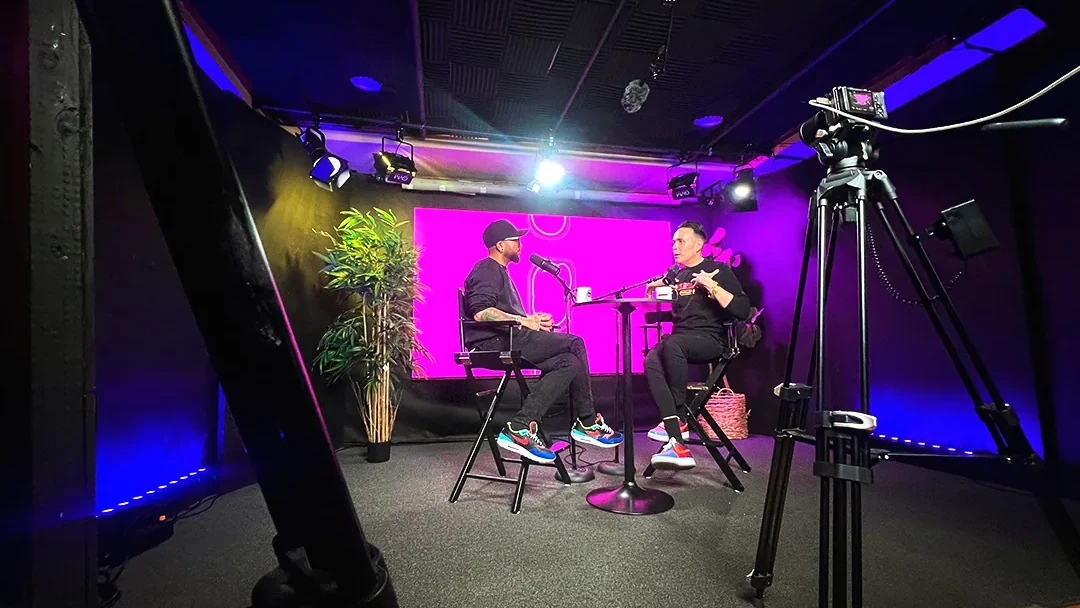
The room has up to eight Sony 4K cameras with a camera director switching live during the session, a Shure microphone on its own channel for every person, recorded in 32-bit float. Setup time is not charged against your session: you get more than twenty minutes of it before the clock starts, because charging people for us aiming a light is a strange way to do business.
There is private parking and the studio is open until 10 PM, which is mostly about guests. Both matter more than they sound like they do.
And if you tell us your show is two people talking about one subject with no video, we will tell you to buy two microphones and keep your money. We would rather have that conversation now than have you cancel in month three.
Want to see the room before deciding? Book a tour. Thirty minutes, free, in person or over video.
If you are further along and comparing studios, these are the seven questions worth asking, and this is what a finished episode costs three different ways.
Or see what our sessions include, written out with the specs.