Most people shopping for a podcast studio start by comparing the hourly rate. It is the easiest number to find and the least useful one you will look at.
An hourly rate tells you what a room costs. It tells you nothing about who is going to point the cameras, whether the audio survives three people talking at once, or who cuts the episode after everyone goes home. Two studios can quote the same hour and deliver work that is not remotely comparable, because one of them is renting you a room and the other is producing a show.
That is the distinction worth understanding before you talk to anybody.
Room rental and production are two different businesses
A room rental gives you a space, some gear and a block of time. You bring the operator, or you operate it yourself. What you leave with is raw files. Everything after that is your problem: editing, color, mixing, cover art, clips, uploading. In Manhattan, room rentals run around $165 an hour on average, which is why the number looks so attractive at first.
A production company takes the session and hands you back a finished episode. Cameras are operated. Audio is mixed. The episode is cut, colored and delivered ready to publish, usually with vertical clips for social. You show up, talk, and leave.
Neither is better. They serve different people. If you have a producer and an editor on your team already, paying a production company to do it again is waste. If you do not, a cheap room is how a podcast dies in episode four: you record three shows, discover that editing each one takes six hours you do not have, and the project quietly stops.
The question is not which is cheaper per hour. It is which one ends with an episode published.
The seven questions
Ask these of anyone you are considering. Listen to the answer, and listen just as hard to how fast and how specifically it arrives.
1. Who operates the cameras during my session?
You are listening for a human being with a job title. “We have a camera director live in the room” is an answer. “The cameras are set up for you” means you are renting a room, which is fine, but now you know.
Multi-camera podcasts are cut live or in post. If nobody is switching during the session, someone is doing it afterward, and that time is either in your price or it is your evening.
2. What happens if two people talk over each other?
This is the single most common way podcast audio gets ruined, and it is entirely a gear-and-setup question.
A good answer includes one microphone and one channel per person, not a shared mic and not a room mic, plus some version of “we record with headroom so a loud moment does not clip.” Studios recording in 32-bit float will tell you so, because it means a sudden shout cannot destroy the take. If the answer is vague, ask what happens to the recording when someone laughs directly into the microphone.
3. What exactly do I get back, and when?
Get this in writing, itemized. A complete answer names the deliverables and a turnaround:
- the finished episode, edited, color-corrected and mixed
- vertical clips cut for Reels, TikTok and Shorts, with a number attached
- cover art and social templates in your brand
- files uploaded and optimized on the platforms you publish on
“We’ll send you the edit” is not an answer. Ask how many clips. Ask how many days. A studio that produces regularly will have a number ready (48 hours, five days, two weeks) because they have done it enough times to know.
4. Who owns the raw files?
You should. Ask anyway, and ask whether you get them and in what format. This is the question that becomes expensive eighteen months later when you want to change studios and your entire back catalog lives on somebody else’s drive.
5. What does the commitment actually look like?
Monthly programs are normal in this business and they are usually the right structure, because a show that publishes on a schedule needs a studio that reserves the slot. But you should know exactly what you are signing.
Ask: how many months, how many sessions per month, what happens if I need to pause, and can I record once before committing to anything. A studio that will not let you do a single session first is telling you something.
6. How many revisions are included?
Editing is subjective and first cuts are rarely right. A number here, two rounds or three, is a sign of a studio that has an actual process. No number usually means either unlimited-until-they-get-annoyed, or one round and a surprise invoice.
7. Can I see three episodes you produced, start to finish?
Not a highlight reel. Three complete episodes, published, that you can watch. Then check the channel: is the show still publishing? A studio whose clients all stopped after six episodes has a problem it is not going to mention.
What it costs in New York
Published prices in this category are rare, which is itself part of the problem. From what is visible in the market:
- Room rental, no crew: roughly $150 to $200 an hour in Manhattan.
- A produced session with an operator and multiple cameras: meaningfully more per hour, because you are paying for people, not square footage.
- Monthly programs at the lean end of the New York market: roughly $1,500 to $4,000 a month, depending on how many sessions and how much post-production is included.
If a monthly quote lands well under that range, ask what is not in it. Usually it is the editing.
When you should not hire anyone
Worth saying plainly, because most articles on this subject will not.
If you are testing whether you even like making a podcast, do not sign a seven-month contract. Record on a decent USB microphone in a quiet room and publish six episodes. If you are still doing it after six, then go looking for a studio. You will be a far better client, because you will know what you actually need.
If your show is audio-only and stays audio-only, you do not need eight cameras or an LED wall. Buy good audio and stop.
The case for a studio gets strong when video is the point: when the show is going on YouTube, when clips are the distribution strategy, when guests are the draw and you want them walking into something that looks like a network set rather than a spare bedroom.
How we answer these
We are a podcast studio in the Bronx, so treat this section as what it is. But the questions above are the ones we get asked, and it is only fair to answer them.
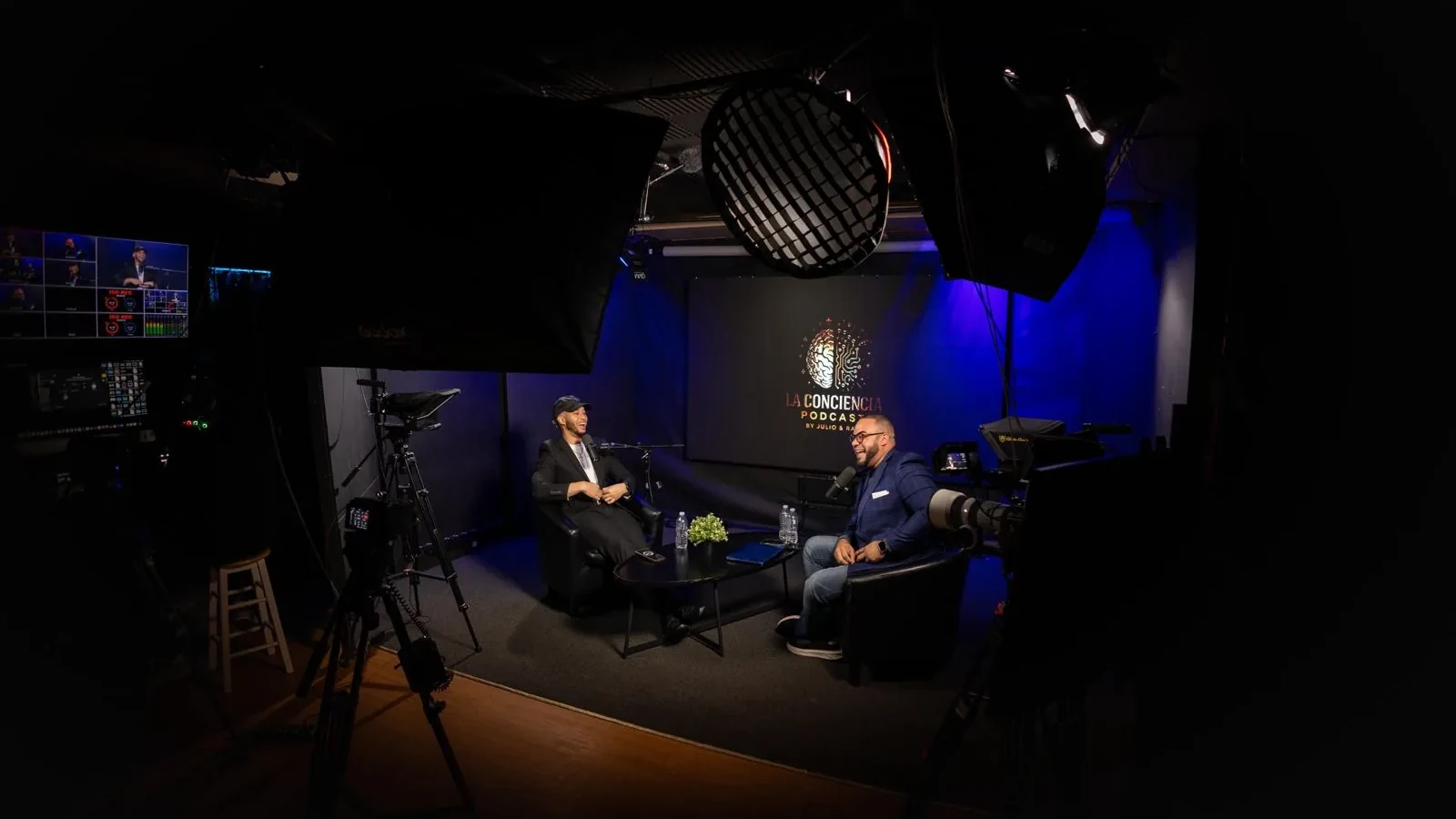
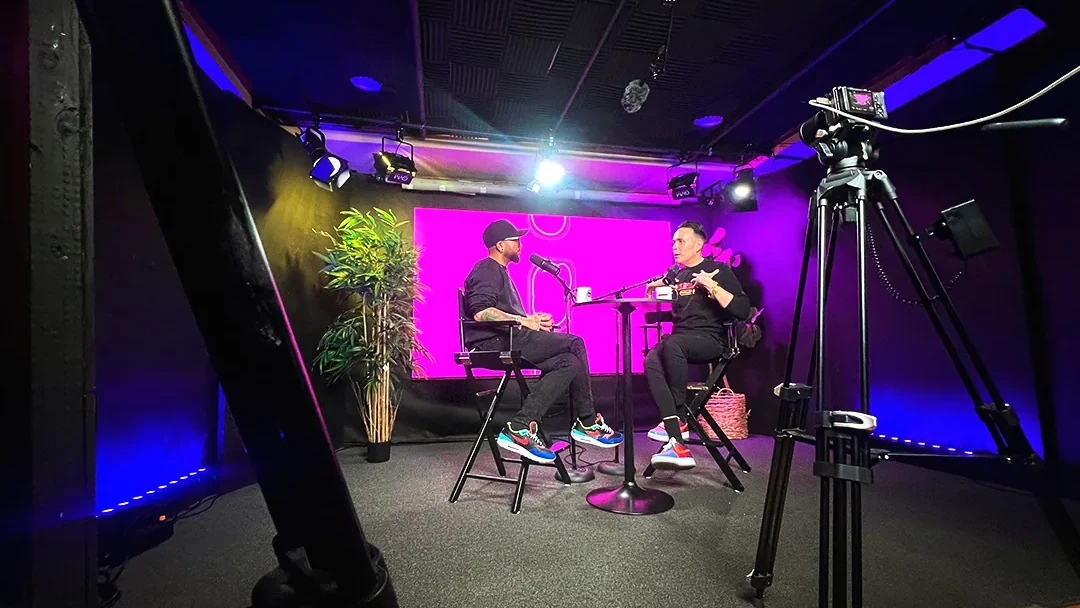
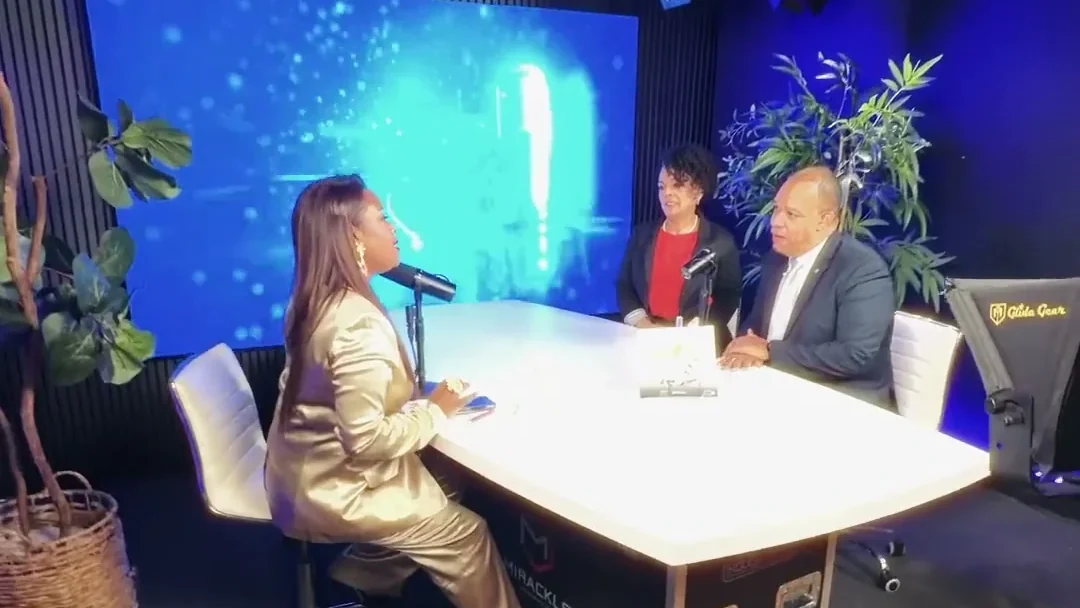
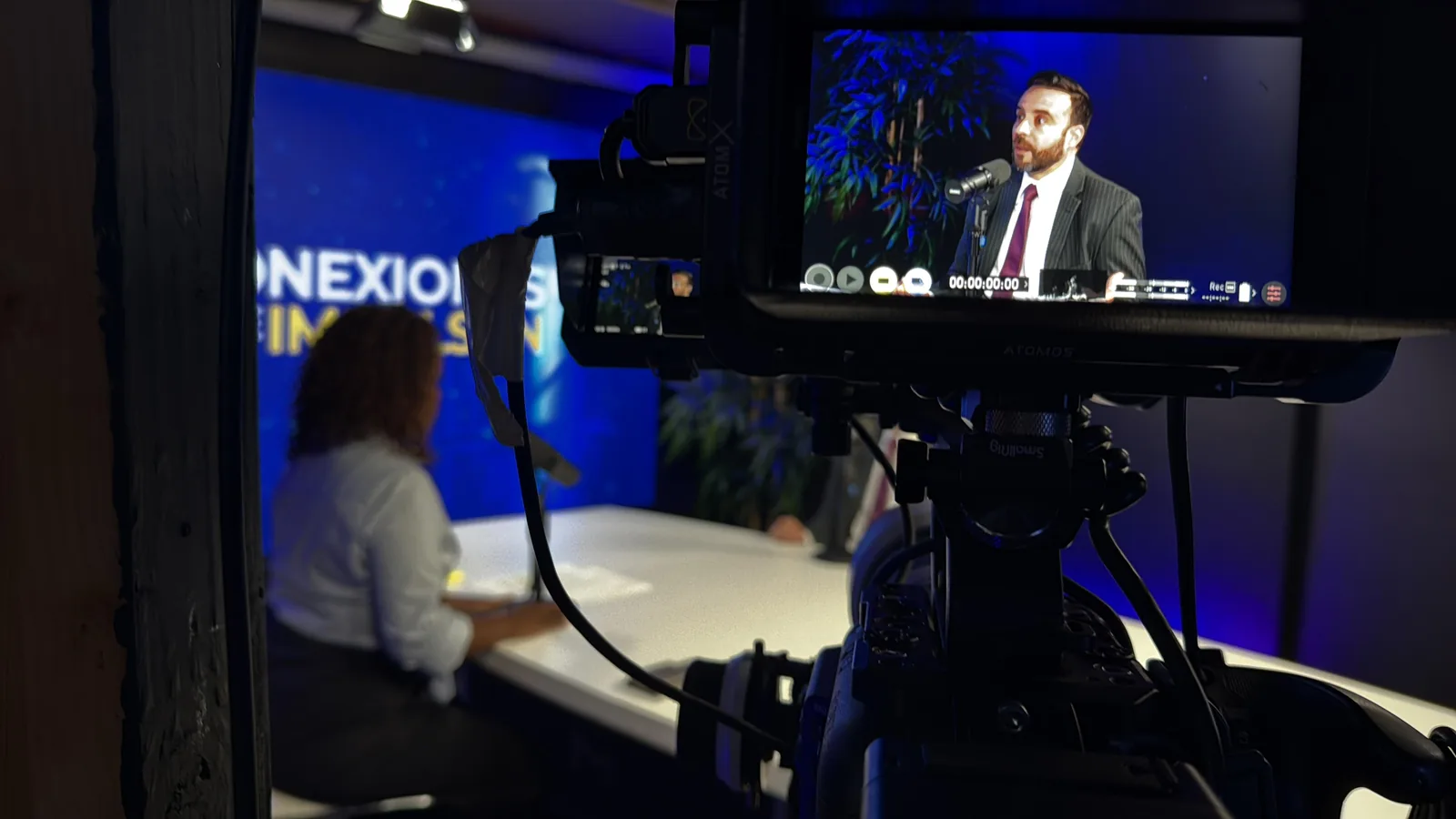
There is a camera director in the room during the session, working up to eight Sony 4K cameras. Every person gets a Shure microphone on its own channel, recorded in 32-bit float. Episodes come back in about 48 hours, edited and colored, with vertical clips cut for social. What we deliver is the finished episode, not the raw camera files: if the raw recording is what you want, that is a different arrangement and worth saying before you book. Editing includes one round of changes. There is a single-session option so you can record once before committing to a program, and there is private parking, which sounds like a small thing until you have carried gear across midtown.
We record in English, Spanish, or both. More than sixteen shows have been produced in this room since 2019, and you can watch them: they are on the shows page, with links to the channels so you can check whether they are still publishing.
Everything is written out on our podcast production page: the studio spec, the four ways to start and what each one includes.
The honest summary of everything above: ask the seven questions, and pay attention to which studios answer them without hesitating. The hesitation is the information.
Want to see the room before deciding anything? Book a studio tour. Thirty minutes, free, in person or over video.