In much of the Bronx, a website that exists only in English is talking to part of the neighborhood and ignoring the rest. Most business owners here know that. What is less obvious is what a genuinely bilingual site involves, and why the cheap version usually makes things worse.
The translate widget is not a bilingual website
You have seen the little dropdown that translates a page automatically. It is free, it takes five minutes, and it is the wrong tool for a business.
Three reasons:
It translates badly where it matters most. Your dish names, your service names, your slogan. Machine translation is genuinely good at ordinary prose and consistently bad at the specific words a business is built on. A menu item that reads as something strange in the other language is worse than leaving it in the original.
Google does not index it. The translation happens in the visitor’s browser after the page loads. There is no Spanish page for Google to find, so you gain nothing in search. If part of your reason for going bilingual is to be found by people searching in Spanish, a widget does not do it at all.
It signals what it is. Customers recognize an auto-translated page, and what it communicates is that you did the minimum.
What a real bilingual site means
Two things, and the second is the one people miss.
Each language has its own address. Your English page lives at one URL and the Spanish at another. Both are real pages that exist in the site, that Google can crawl, and that somebody can link to directly.
The two are declared as versions of each other. There is a small piece of markup that tells search engines “this page and that page are the same content in two languages.” Without it, your two versions can end up competing with each other instead of supporting each other, which is a self-inflicted problem that nobody notices for months.
That is the entire technical core of it. Everything else is content work.
Translating is the easy half. Adapting is the other one.
The mistake is treating the second language as a copy of the first.
Some things translate directly: your hours, your address, your service list. Some things should not.
What people search for differs. Somebody looking for tax help in English and somebody looking for the same service in Spanish do not type equivalent phrases. If you translate your English page word for word, you get a Spanish page optimized for English search behavior, which reaches nobody. Each version should be written around what people actually type in that language.
Tone differs. Formality, how directly you address the reader, how much warmth is expected. A translation that is technically correct can still land wrong.
Sometimes the offer differs. If one part of your customer base mostly asks about one service, that service deserves more space in their language.
This is why we do not simply translate our own pages. Each language version is written to work in its own language, which sometimes means the two say slightly different things in a different order. That is correct, not sloppy.
Which language should be the default
Worth thinking about rather than assuming.
The default is what somebody sees when they land without choosing. Most businesses default to English because it feels like the safe institutional choice. But if seventy percent of your customers are more comfortable in Spanish, defaulting to English makes seventy percent of your visitors do work before they can read you.
Look at who actually walks in. Then decide. There is no rule that says English has to be first.
Either way, make the switch visible and obvious, near the top, labeled clearly. A flag icon buried in the footer does not count. And when somebody switches, they should stay on the page they were reading, not get dumped on the homepage. That last detail is broken on a surprising number of bilingual sites.
What it costs, honestly
Roughly a third more than a single-language site, not double. The layout, the design and the build are done once. What doubles is the writing and the ongoing maintenance.
The maintenance is the part to think hard about. Every time you change a price, a service or an hour, you change it twice. A bilingual site that is current in English and eight months stale in Spanish is worse than an English-only site, because it tells your Spanish-speaking customers they are the version that gets updated later.
Before committing, ask yourself honestly whether both versions will get kept up. If the answer is no, one well-maintained language beats two half-maintained ones.
When you do not need it
- If your customers all speak one language comfortably. Some do. Adding a second language for appearances is cost with no return.
- If you cannot maintain both. See above.
- If your business is entirely phone and in person, and the site is only there to establish that you exist. One language and a clear phone number may be all it needs.
What it gets you when it is right
Someone reading in the language they think in reads more, understands more and converts better. For anything involving trust, and that includes legal, medical, financial and immigration services, this is not a nicety. Somebody deciding whether to hand you a serious problem wants to be sure they understood everything.
And in search, you are competing for the Spanish-language queries in your category, where the competition is usually much thinner than it is in English. That is often the single easiest advantage available to a local business here, and most of them never take it.
What we do
Every site we build can be English and Spanish, with real separate pages, properly declared to search engines and written to work in each language rather than translated across. It is included in the four-page plan at $800, one time, for the build.
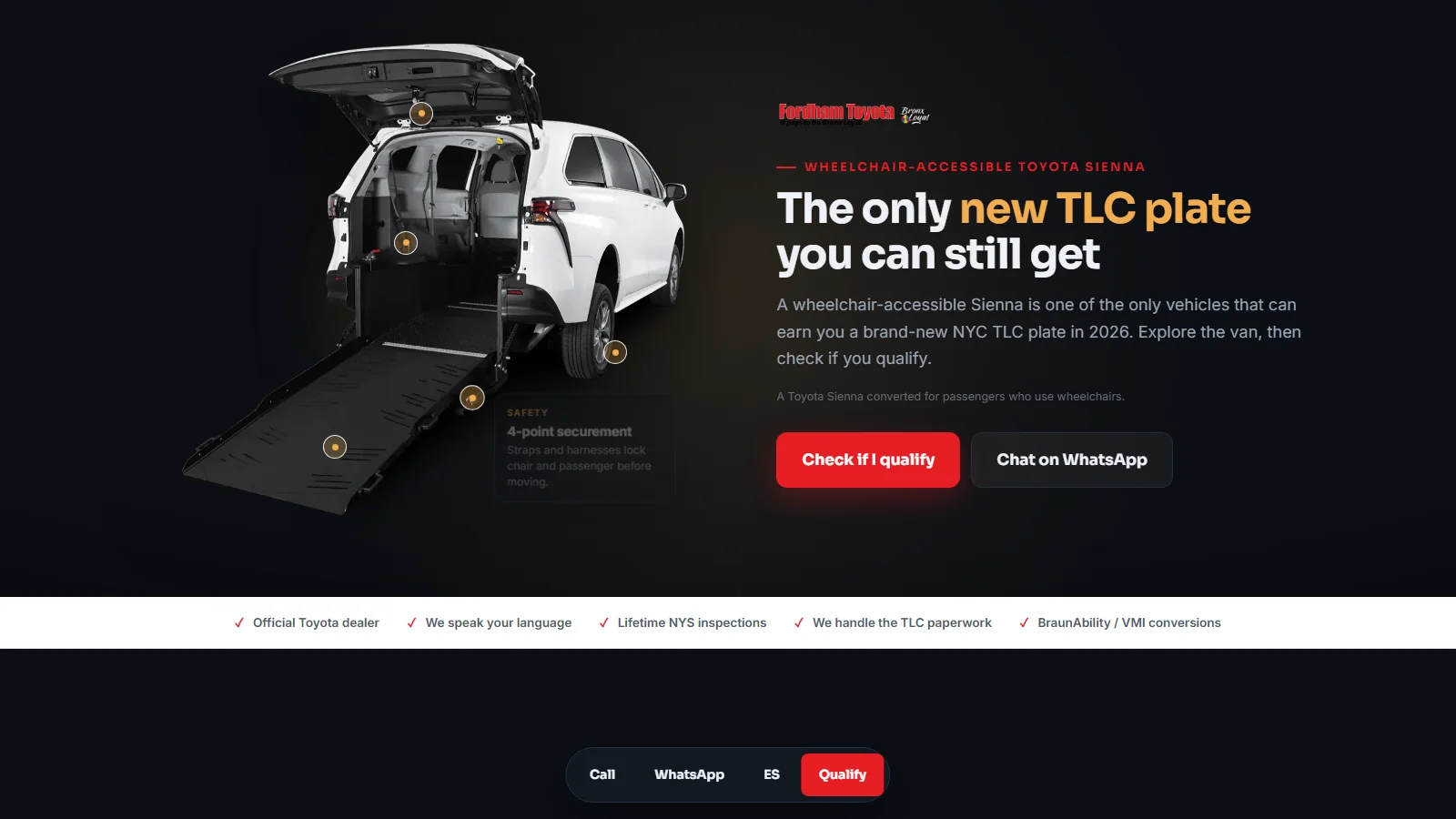
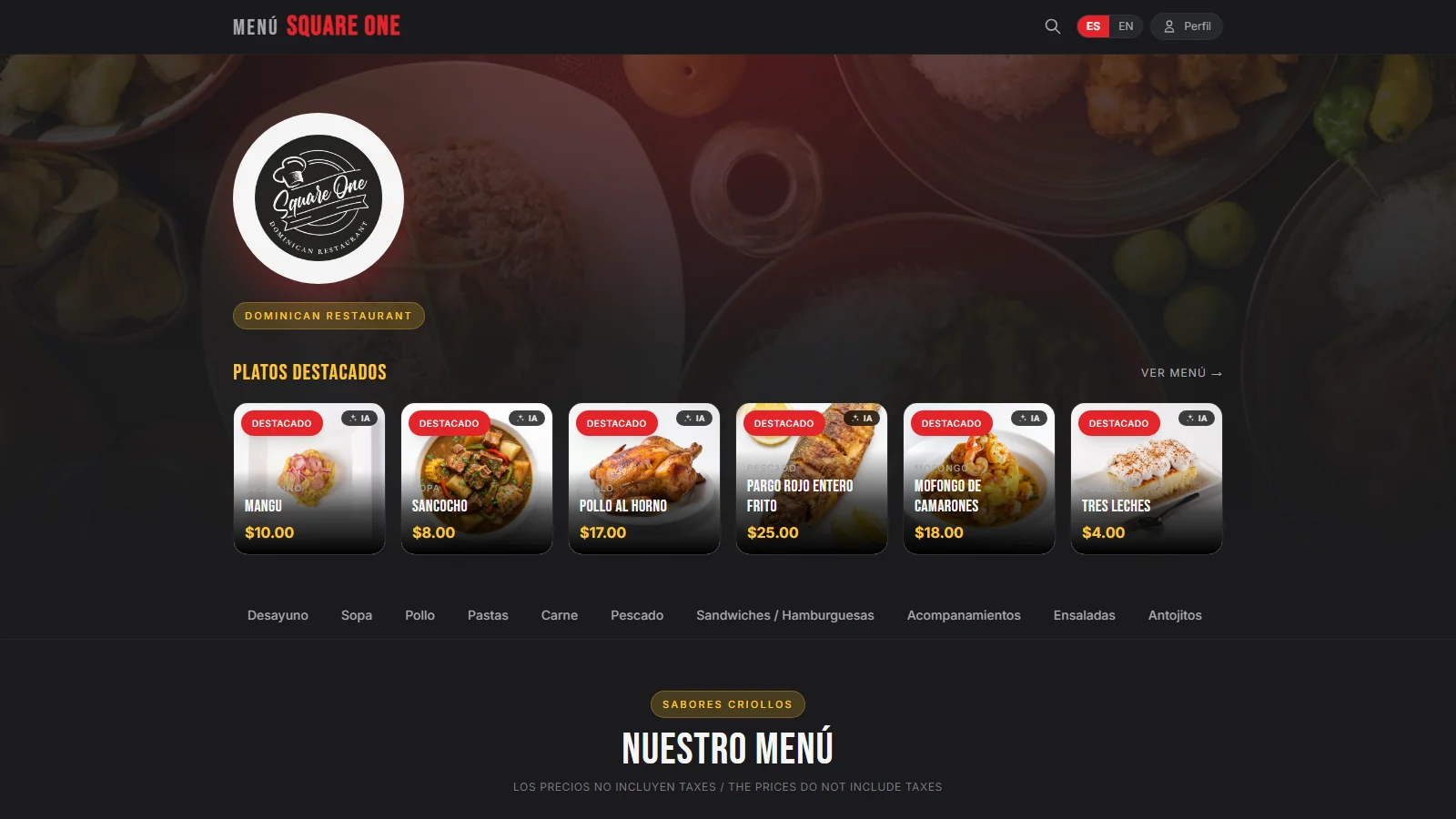
This site is built that way, and so are several of the ones in our portfolio, including a restaurant menu and a documentary series. Open them, switch languages, and see whether it holds up.
If you want to talk about which languages your business actually needs, tell us who your customers are and we will give you a straight answer.